Why Does My Garage Door Stop Halfway? 7 Places to Look for the Problem
Why Does My Garage Door Stop Halfway? 7 Places to Look for the Problem
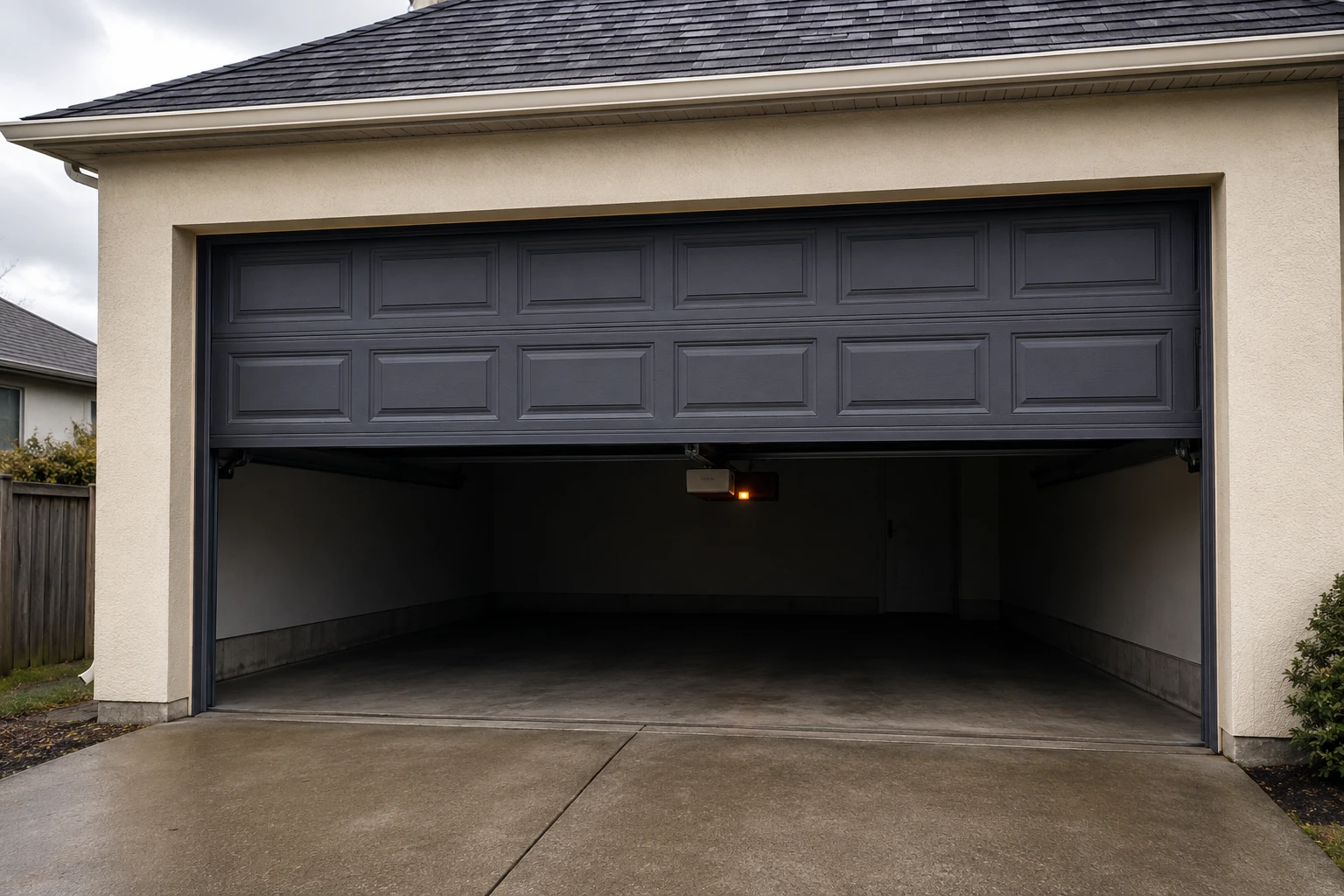
A garage door that stops halfway can have several possible causes. A blocked sensor, incorrect limit setting, or something caught in the track could all be responsible. The challenge is figuring out exactly what’s causing it.
This guide takes you through seven places to check. Some take only a couple of minutes to inspect, while others may point to a problem that needs professional attention.
Let’s start with the easiest thing to check: the photo-eye sensors.
1. Photo-Eye Sensors Are Blocked, Dirty, or Misaligned
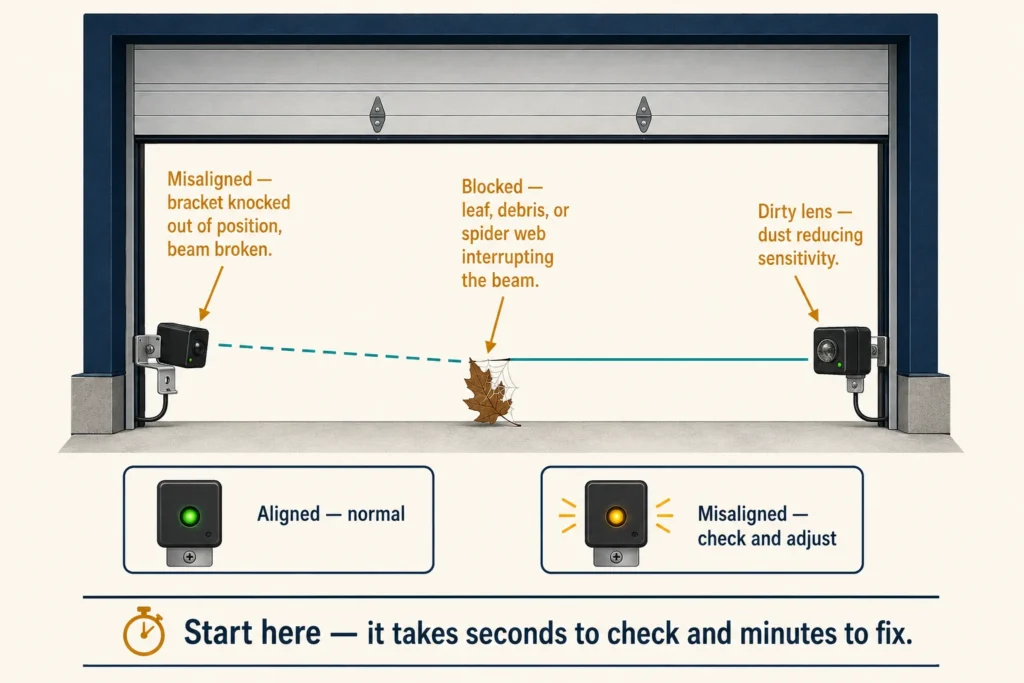
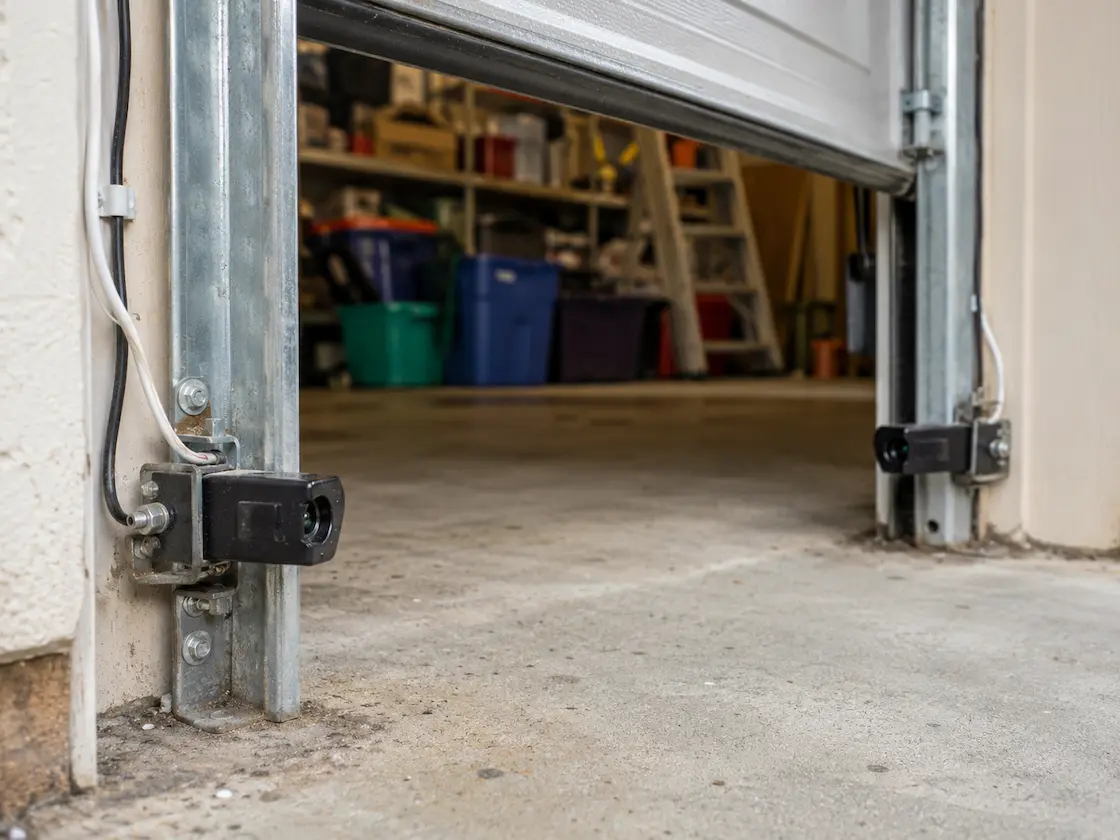
Photo-eye sensors are two tiny devices mounted a few centimetres above the garage floor, one on each side of the door opening. They send an invisible beam between them while the door is moving. If something blocks that beam, the garage door opener assumes there’s an obstruction and can stop the door before it reaches the floor.
It doesn’t take much to block it either. Dust, spider webs, a leaf, or even a sensor that has been knocked slightly out of position can cause the problem. That’s why the photo-eyes are one of the first places worth checking when your garage door keeps stopping halfway.
Start by looking at the small indicator lights on both sensors. Depending on your opener, they should normally be lit steadily when the sensors are aligned correctly. If one is blinking or off, the sensors may be misaligned. Check that both are facing each other, then gently adjust the bracket until the lights return to their normal state.
While you’re there, wipe both sensor lenses with a soft, dry cloth and clear away anything that could be blocking the beam. Try the door again afterwards. If it still stops mid-cycle, you can move on to the next possible cause.
2. The Limit Settings Need Adjusting
When your garage door was installed, the installer set the opener to stop at the right points: fully open and fully closed. Those stopping points are called limit settings. If they change over time, the door can stop short because it thinks it has already reached its endpoint.
Fortunately, you can usually adjust these settings yourself using the controls on the opener. They’re typically found on the back or side of the unit mounted to your ceiling. You may see two small dials or screws labelled “open” and “close.”
Make a small adjustment, then operate the door before changing anything else. The exact process varies between brands, so check your opener’s manual if you’re not sure which control to use.
3. Something Is Blocking or Damaging the Tracks
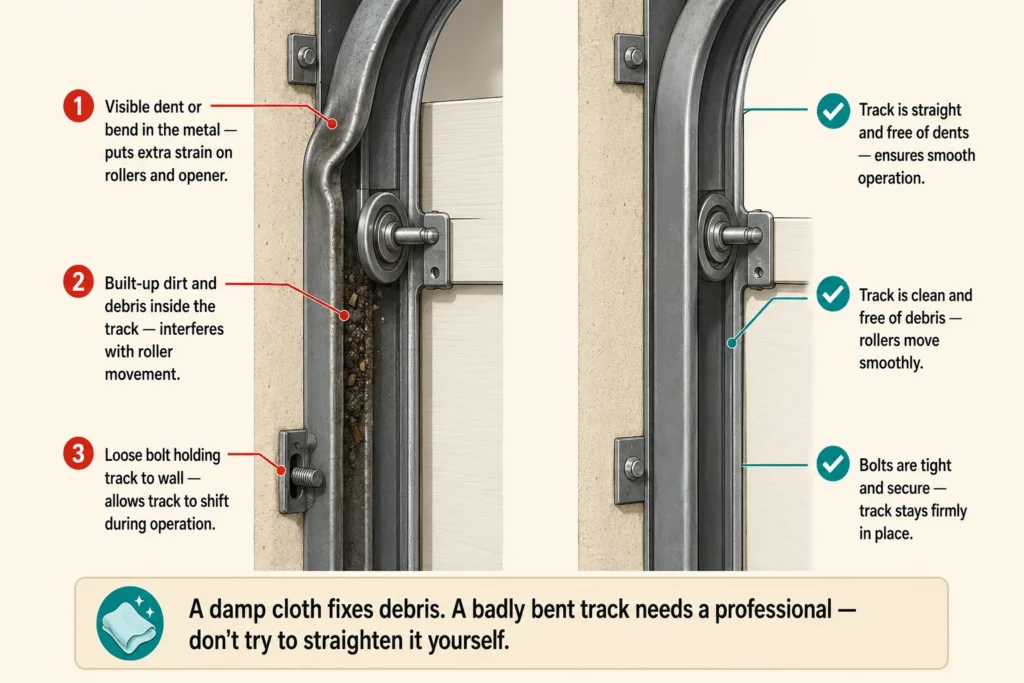
When we’re called out for a door that stops halfway, one of the first things we check is the track. These are the metal rails running along both sides of the door, with the rollers sitting inside them to guide the door as it moves. Even something as simple as dirt, a small toy or a loose bolt can interfere with that movement.
Take a quick look along both tracks and check for:
- Visible dents or bends in the metal
- Built-up dirt or debris inside the track
- Loose bolts holding the track to the wall
If you find dirt or debris, wipe it down with a damp cloth and let the track dry. Don’t try to straighten a badly bent track yourself. A damaged track can put extra strain on the rollers and opener, so it’s safer to have a professional inspect and repair it.
4. Weak or Broken Springs
Garage door springs counterbalance the weight of the door, so the opener doesn’t have to lift it alone. Over time, they can lose tension, and once that happens, the door can start stopping partway through its cycle.
The problem is that a weakening spring isn’t always obvious from the outside. However, you’ll know when it breaks. A broken spring usually makes a loud noise, and after that, the door can stop moving altogether or stop very early in its travel.
If you confirm this is what’s happening, call a registered professional. Don’t try to adjust or replace a garage door spring yourself. These springs are under extreme tension, and if one suddenly releases, it can cause serious injuries or damage to anything nearby.
You can check more on the risks of heavy door mechanisms in WorkSafe Queensland’s safety guidelines.
5. Worn Rollers or Hinges Are Slowing the Door

Think of the rollers and hinges as the parts that help your garage door move smoothly. The rollers guide the door along the tracks, while the hinges let the panels bend as the door opens and closes. As these moving parts wear out, the door can become noisy, shaky or harder to move.
Thankfully, worn rollers and hinges are usually easy to spot. Look for one or more of these signs:
- The door makes grinding or squeaking sounds as it moves
- The door wobbles or shudders during operation
- A roller looks cracked, chipped, or damaged
Regular maintenance can help keep your rollers and hinges working smoothly for longer. Use a silicone-based lubricant or one specifically designed for garage doors, and apply it to the roller bearings and hinge pivot points.
Also, if you notice a roller or hinge is cracked, damaged, or excessively worn, replace it rather than relying on lubrication to fix the problem.
6. Remote or Wall Control Needs Reprogramming
Press the wall button first. If the door runs fine that way but not with the remote control, the remote is likely the problem rather than the door.
The most likely cause is the batteries. Weak batteries can prevent the remote from sending a strong enough signal, especially if it has been sitting unused for a while. So, replace them and test the door again.
If that doesn’t fix it, the remote may have lost its connection with the opener. In that case, you’ll need to reprogram it. The exact steps vary between brands, but the process usually looks like this:
- Locate the “Learn” button on the opener unit. It’s usually on the back panel and often has a small LED next to it.
- Press and hold the “Learn” button until the LED turns on, then release it.
- Within 30 seconds, press and hold the button on your remote until the opener’s light blinks.
- Test the remote to confirm it’s working.
Still not working? Try standing closer to the door. Sometimes, being out of range or too far from the receiver is enough to weaken the signal.
7. Opener’s Motor or Gear Is Failing
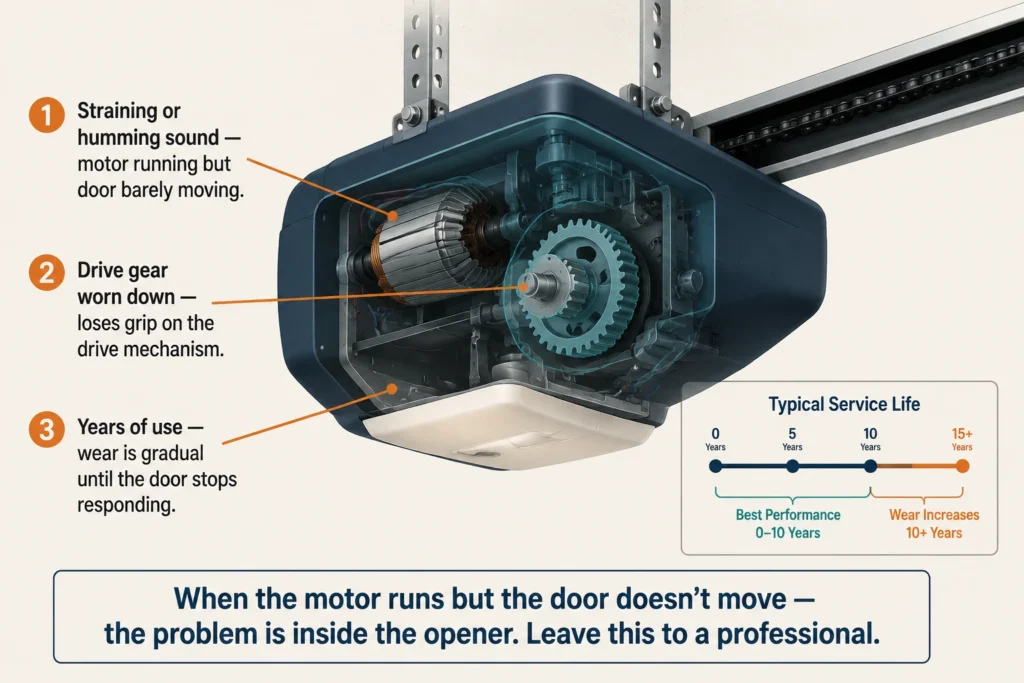
If the motor is straining, grinding or humming when the door stops halfway, the problem could be inside the opener itself. A worn motor or drive gear can prevent it from moving the door properly.
This usually happens when the opener is getting old. After years of use, the drive gears can wear down and eventually lose their grip. When that happens, you’ll hear the motor running, but the door barely moves or doesn’t move at all.
Fixing this usually means opening the opener housing and working around electrical components, so it’s best left to a professional. A garage door technician can check the motor and gears and determine whether the opener can be repaired or needs replacing.
Get Your Garage Door Moving Properly Again
A few simple checks can often tell you whether you’re dealing with a minor adjustment or a problem that needs professional attention. The important thing is knowing where to draw that line.
Springs and a failing opener are two different components. Both can involve serious safety risks or more involved repairs, so they’re better left to a professional.
If you’ve worked through this list and the door still isn’t moving correctly, the team at Control Room can diagnose and fix the problem quickly. Get in touch, and we’ll get your door running properly again.

Why Garage Door Balance Affects Your Opener, Cables and Everyday Reliability
Why Garage Door Photo-Eye Sensors Fail Even When Nothing Is Blocking Them
Why a Garage Door Can Look Level When Closed but Travel Crooked on the Tracks
Garage Door Noises Decoded: What Grinding, Squeaking and Rattling Can Mean
Why Garage Door Safety Starts Before You Press the Remote


Follow our social


