Why a Garage Door Can Look Level When Closed but Travel Crooked on the Tracks
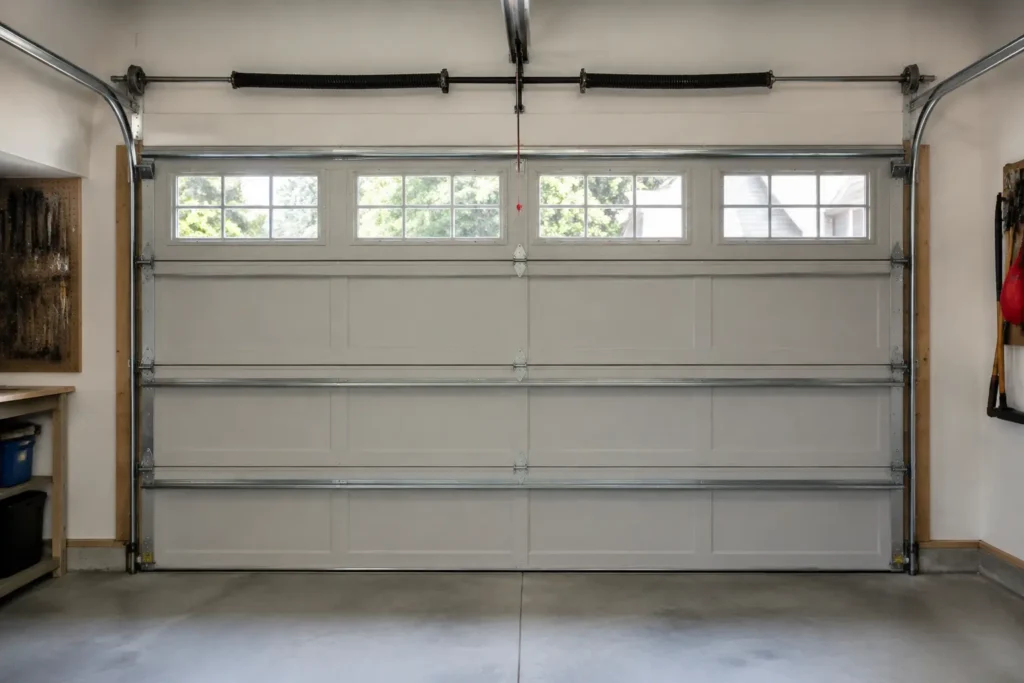
Why a Garage Door Can Look Level When Closed but Travel Crooked on the Tracks
You close your garage door, and it sits perfectly level. Then you press the remote the next morning and one side lifts faster than the other. That uneven travel is a sign of a garage door crooked on the track.
The floor seal and weatherstrip press the panels flat when closed, so the tracking fault only shows once the door starts moving. Most homeowners don’t pick up on it until the rollers, springs, or brackets are already worn.
We’re Control Room, and we’ve spent over a decade on panel lift garage doors across Brisbane. Suburbs like Wynnum, Ipswich, and North Lakes know our work well. This guide breaks down:
- The common causes behind crooked garage doors
- How your opener can make things worse
- When it’s time for a professional inspection
Spotting these signs early can save you a full track replacement down the line.
Why Your Garage Door Looks Level but Travels Crooked on the Track
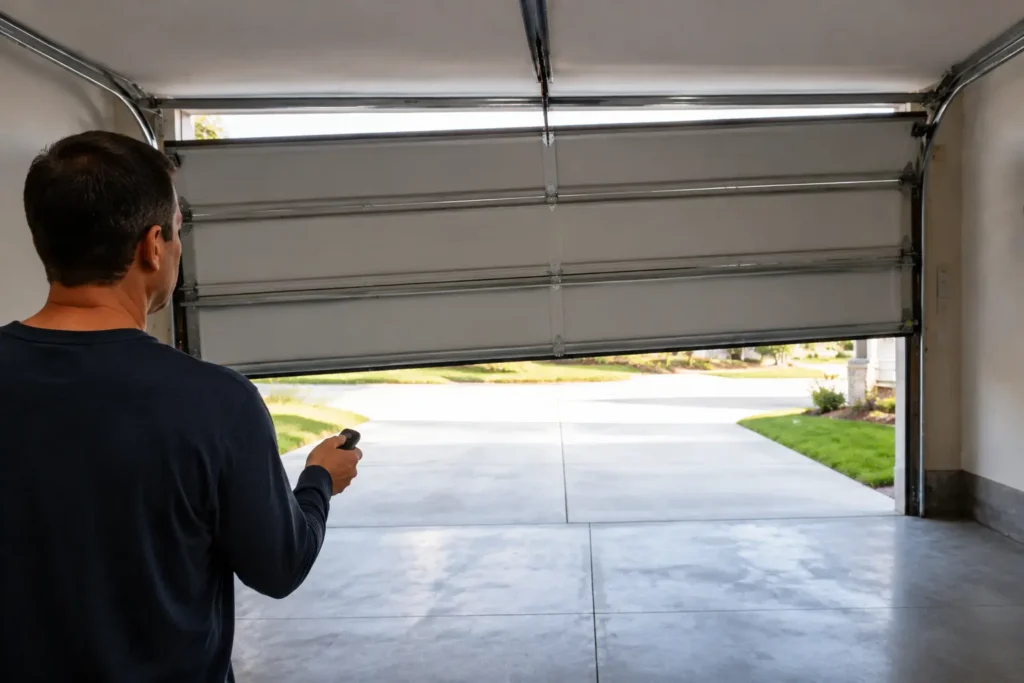
A garage door crooked on track doesn’t always look crooked when it’s closed. The bottom seal presses flat against the garage floor, and the weatherstrip along the frame holds the panels snug from both sides.
The fault only shows up once the door starts to open. As the rollers carry the weight along the vertical track and into the horizontal track, one side lags. The panels can also tilt as they bend around the curve. And nine times out of ten, the door seemed perfectly fine the day before.
We come across this on jobs right across Brisbane, from older homes to brand-new builds. And the longer crooked doors travel without a fix, the faster the rollers, brackets, and springs wear down on the side doing all the work. That uneven load can turn a minor alignment issue into a full track replacement if you leave it too long.
Common Causes Behind Crooked Garage Doors
So what’s actually going on inside the tracks? Crooked garage doors usually come down to a handful of mechanical faults. If you leave these faults unaddressed, each one puts extra stress on the rollers, springs, and brackets on the opposite side.
Below we cover the most common ones.
Worn Rollers and Loose Brackets
Rollers guide the door along the track every time it opens and closes. Steel and nylon rollers both wear down after thousands of cycles, and once they develop flat spots or cracks, the door starts to drag on one side (it only gets worse from here).
Loose brackets create a similar problem. When the bolts holding the track brackets to the wall loosen up, the metal tracks shift out of position. That small gap between the track and the frame is enough to throw off the door’s travel completely.
That’s why WorkSafe Queensland lists door guides, rollers and brackets as components that need regular inspection to prevent unsafe movement and further damage.
Cable Tension and Broken Spring Problems
Once you rule out the rollers, the next place to look is the cables and springs.
Lift cables run along each side of the door, and they need equal tension to keep the panels level during travel. If one cable stretches or frays, it creates slack on that side and the door pulls unevenly.
A broken spring is harder to ignore. You’ll know when it snaps because the bang echoes through the whole garage. Torsion springs sit above the door and provide the counterbalance that offsets the panel weight.
So when one goes, the door loses spring tension on that side and either drops suddenly or tilts mid-travel during every opening and closing cycle.
Track Alignment and Impact Damage
From there, the tracks themselves deserve a closer look.
Even a slow bump from a car reversing in the driveway can bend a vertical track section out of alignment (doesn’t take much, honestly). And once that bend is there, it won’t straighten out on its own.
The horizontal track tends to collect its own set of problems. Dirt, sticky buildup, and debris build up inside the track over time, and that grime forces the rollers off their path. Visible gaps between the track and its mounting brackets point to impact damage or loose hardware that has shifted over the years.
If your door moves unevenly or you notice track misalignment, stop using the automatic opener straight away. Get that looked at first.
How a Garage Door Opener Can Make an Off-Track Door Worse
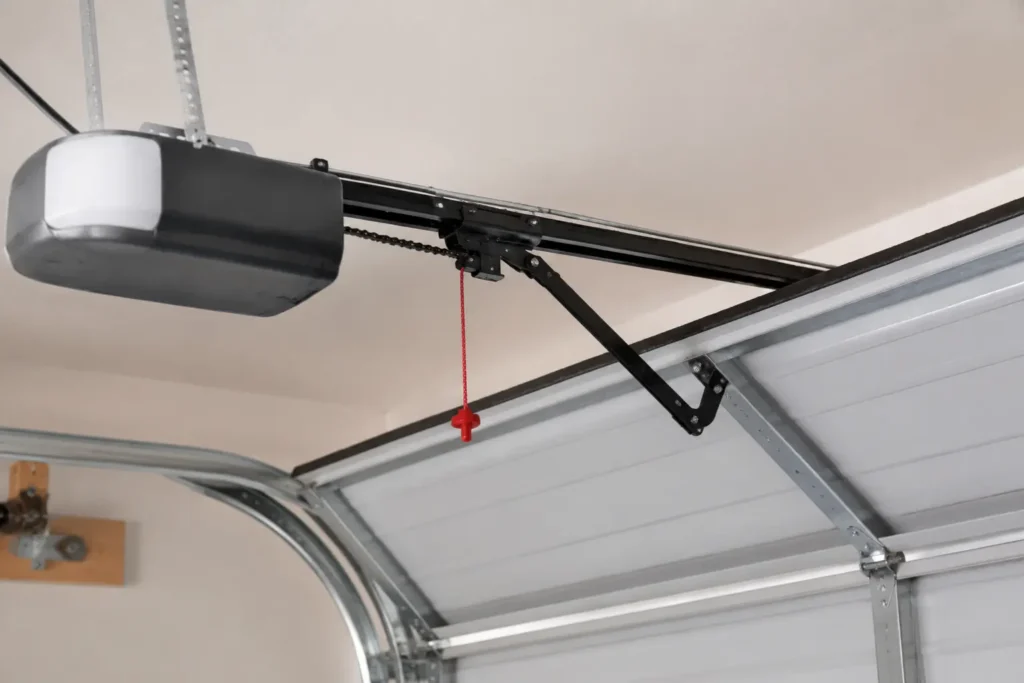
Believe it or not, your garage door opener won’t adjust for a crooked door. The motor pulls with the same force every cycle, regardless of whether the door is properly aligned or halfway off the track.
So if the rollers are binding or the track is bent, the opener just forces the door through it. That forced movement warps the metal tracks further and strips the gears inside the opener after just a few weeks of use.
We’ve pulled doors completely off tracks where the homeowner had been hitting the remote for weeks without realising the damage. By that point, a simple adjust and tighten job won’t cover it anymore.
If your door moves unevenly or you notice track misalignment, stop using the automatic opener straight away. Use the emergency release cord to disconnect the opener and operate the door by hand until a technician inspects it. An off-track garage door that keeps running on the opener almost always ends up needing a full track replacement.
Now, here’s where most homeowners get stuck.
Signs Your Door May Need a Qualified Technician Over a DIY Fix
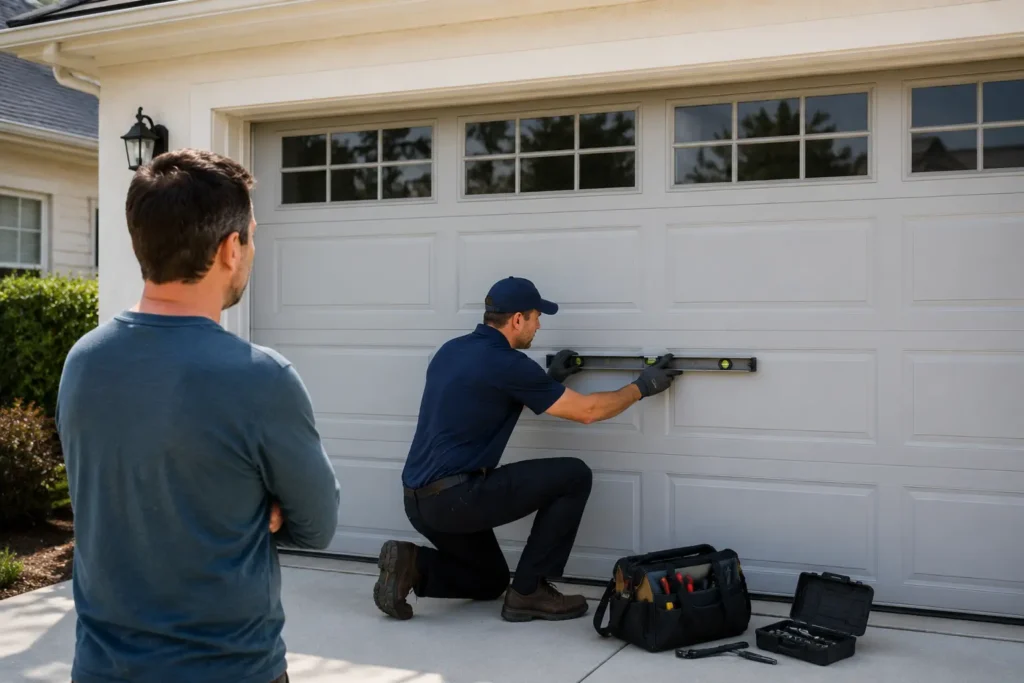
You can tighten a few loose bolts or lubricate rollers with silicone spray yourself, and that’s perfectly fine for basic upkeep. But some garage door repairs sit well outside a safe diy fix.
If you spot any of these, put the tools down and call a qualified technician:
- Uneven Travel on One Side: Your door lifts faster on one side during every open and close. This points to a cable tension imbalance or worn rollers that need a full replacement rather than a quick adjust.
- Grinding Along the Track: The rollers catch or skip over dirt and debris inside the rail. Keep forcing the door past these points, and you’ll warp track sections or snap brackets loose.
- Gaps Along the Track: Daylight between the vertical track and its brackets means the frame has shifted. That gap lets the door wobble further off course with every cycle.
- Door Stalls Mid-Travel: The door hesitates or reverses before reaching the top. More often than not, this signals dangerous tension in the torsion springs (one wrong move and you’re in hospital).
Safe Work Australia classifies garage doors as equipment that requires ongoing inspection, maintenance, and repair of moving equipment throughout its working life. So if you’re dealing with springs, track alignment, or anything under tension, leave it to someone with the right training.
Keep Your Panel Lift Garage Door on Track with the Right Garage Door Repair
Crooked garage doors don’t fix themselves, and every extra cycle on a bent track grinds down the hardware faster on the loaded side.
So if your panel lift garage door hesitates, tilts, or gets stuck halfway up, don’t wait on it. Book a professional inspection before a small alignment issue turns into a full garage door repair job.
Control Room has been sorting out crooked doors, track alignment faults, and broken springs across Brisbane since day one. Give us a call, and we’ll get your door running straight again.


Why Garage Door Balance Affects Your Opener, Cables and Everyday Reliability

Why Does My Garage Door Stop Halfway? 7 Places to Look for the Problem

Why Garage Door Photo-Eye Sensors Fail Even When Nothing Is Blocking Them

Garage Door Noises Decoded: What Grinding, Squeaking and Rattling Can Mean

Why Garage Door Safety Starts Before You Press the Remote
Follow our social


