Why Garage Door Safety Starts Before You Press the Remote
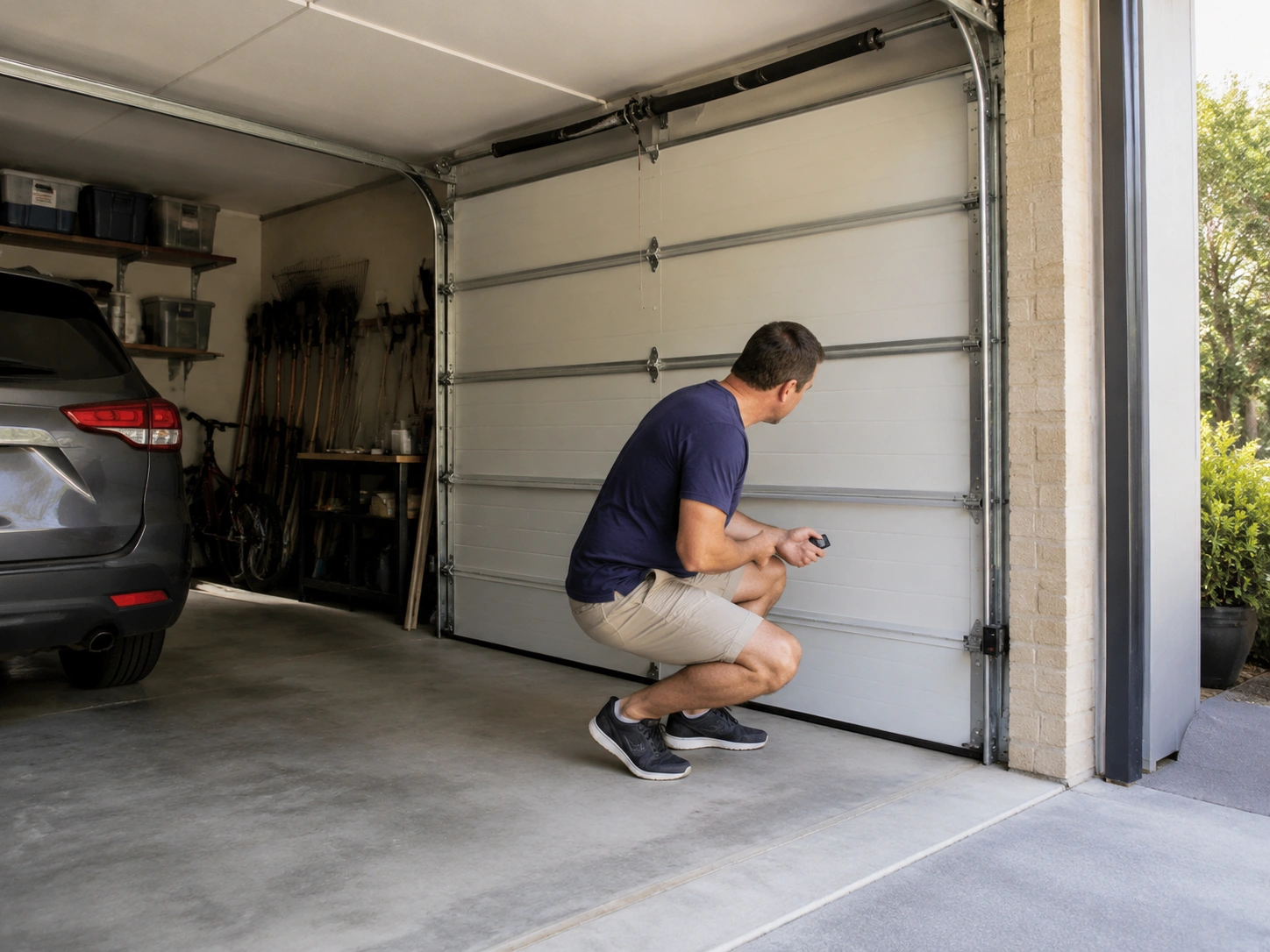
Why Garage Door Safety Starts Before You Press the Remote
Garage door safety depends on the parts you don’t usually see. Springs, cables, tracks, sensors, and the automatic opener all work together to lift and lower the door safely. If even one of these components develops a fault, the entire system can become unreliable.
Moreover, panel lift and sectional garage doors carry a lot of weight, quite literally. When something’s off with the beams, springs, or opener settings, the risk doesn’t stay hidden for long. It shows up as a jammed track, a door that won’t reverse, or someone getting injured.
So in this article, we’ll cover what garage door safety really involves. We’ll also look at how safety beams and sensors work, what happens when servicing gets skipped, and where safety overlaps with home security.
What Garage Door Safety Covers
Garage door safety covers the sensors, cables, tracks, and habits that stop the door from causing injury or damage. It’s a mix of design, installation, and upkeep working together rather than just a feature.
Sectional garage doors are built with safety in mind, but that only holds up if everything’s installed and maintained properly. Before we get into the details, have a look at where safety begins:
Sectional Garage Doors and Why Their Design Improves Safety
Sectional doors move on tracks in individual panels, which cuts down on pinch points compared to older tilt doors. With fewer gaps where hands or paws can become trapped, they’re generally a safer choice for families with children and pets.
The multi-panel design spreads weight evenly across the tracks. That lowers strain on the springs and cables over time. Poorly designed or ageing sectional systems lose this safety advantage (and it usually happens quietly, one worn bracket at a time).
A well-maintained sectional garage door protects both your family and your belongings inside. It’s a small thing that pays off every single time the door opens.
Garage Door Installation: Where Safety Starts
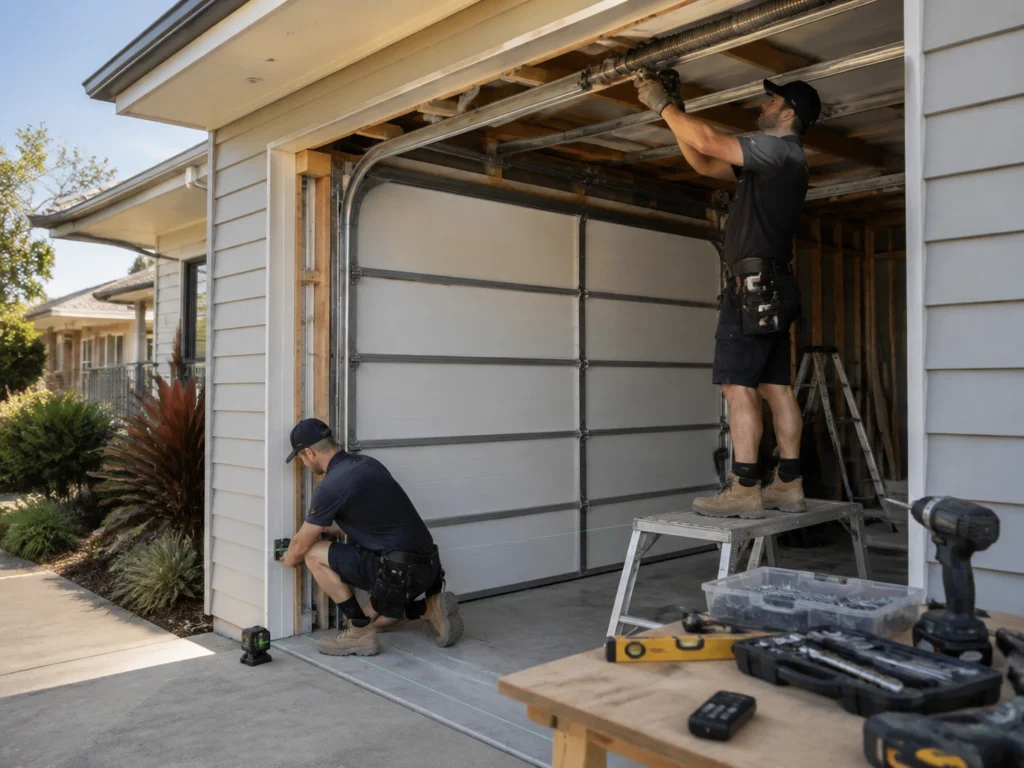
Correct installation aligns tracks, springs, and sensors so every safety feature works the way it’s meant to. A rushed or DIY install often causes sensor misalignment down the track.
In fact, accurate installation specifications, including wind-load requirements and structural resistance standards under the NCC, play a major role in how well the door performs over time. Our experienced team across Wynnum and Chermside always checks calibration before handing back the remote.
A new garage door installed to your home’s style and aesthetic appeal still needs this technical groundwork first. A missed installation step can undo the advantages of even the best-looking door.
Safety Beams and Sensors: What They’re Doing
Safety beams and sensors detect anything in the door’s path and stop it from closing on people or objects. They’re the first line of defence against injury.
Now that you know what safety covers broadly, here’s where the tech kicks in:
How Safety Sensors Detect Obstructions
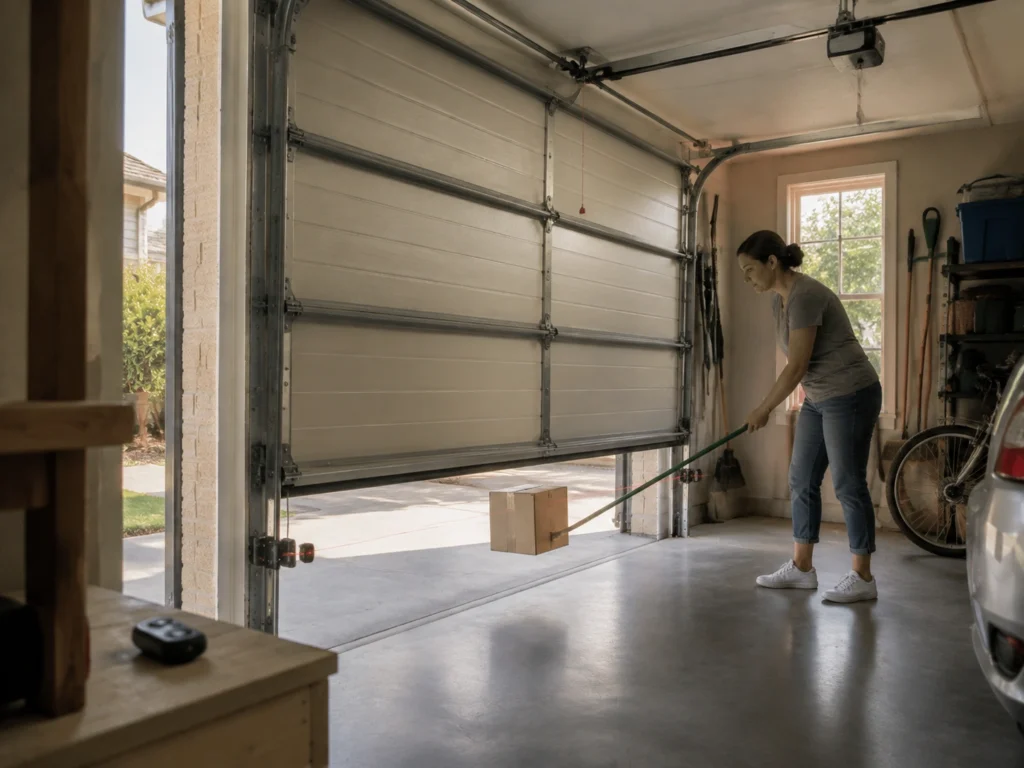
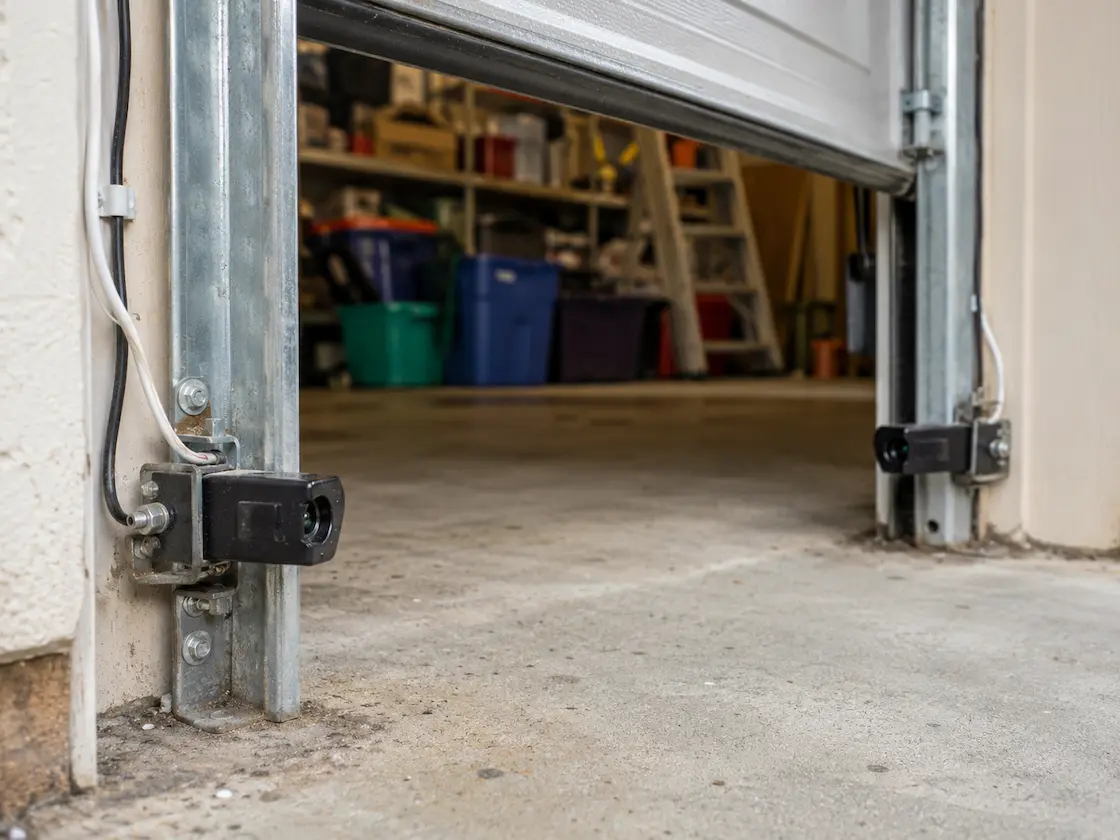
Sensors sit low on either side of the track, sending an infrared beam straight across the garage opening. If anything breaks that beam, the door will automatically stop and immediately reverse.
And this happens in a fraction of a second, well before any contact occurs. The sensor system is simple, but it’s doing a lot of work every time the door closes.
That said, dust, spiderwebs, or a knocked bracket can throw sensor accuracy off (yes, even a cobweb can cause a false stop). So, keeping the beam path clear of dirt and debris helps sensors do their job correctly.
Why the Door Closes on Its Own Sometimes
Some openers include auto-close timers that shut the door automatically after a set period. This happens regardless of what’s underneath it at the time.
On top of that, auto-close timers can shut the door even when someone’s still nearby. That’s exactly why sensors need to be working properly at all times.
Over time, changing weather conditions and ongoing vibration can gradually shift sensors out of position. A visual check can catch loose mounts, tilted sensors, or blocked lenses before they affect the system’s readings.
What if Your Garage Door Service Gets Skipped for Too Long?
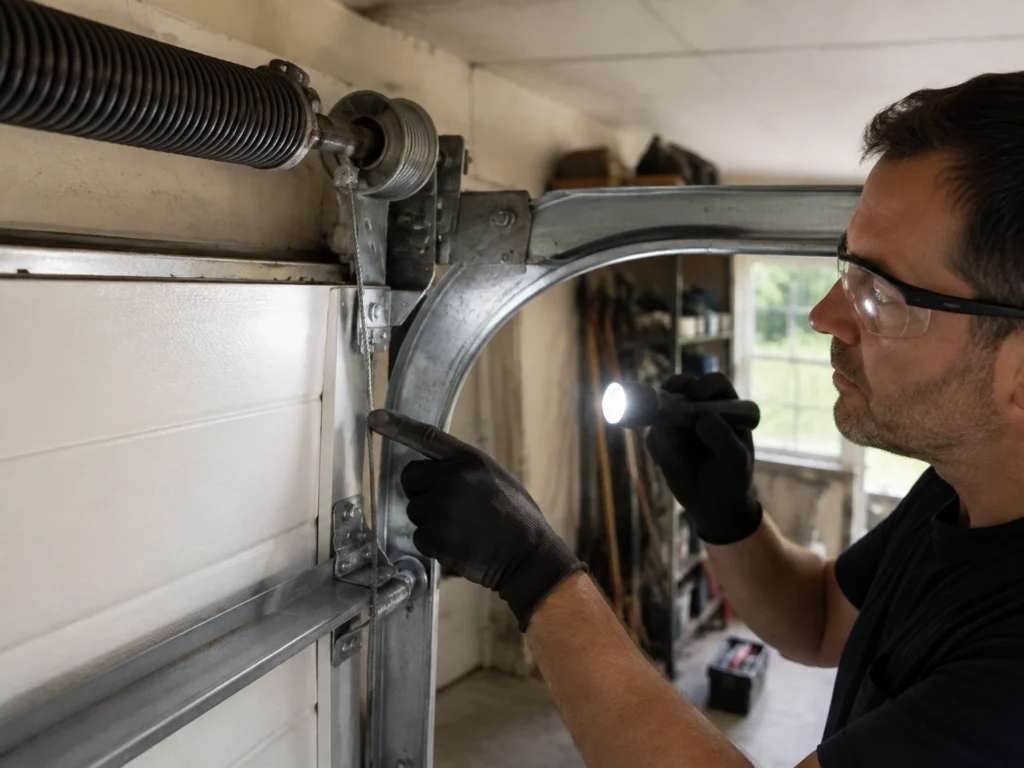
Missing regular servicing allows worn cables, springs, and misaligned tracks to develop into safety hazards that often go unnoticed until something fails. It’s easy to delay maintenance until a problem suddenly demands attention.
Two spots tend to suffer most once regular servicing gets pushed back:
Worn Cables and Springs: A Bolder Risk Than You’d Think
Cables and springs carry the full tension of the door’s weight every time it moves. Over time, that tension wears down even good-quality hardware.
A snapped cable can cause the door to drop suddenly and without warning (not something you want to be standing under). Early signs of fraying should never be ignored because they often appear before a cable fails.
We strongly recommend checking cables every 12 months for most Brisbane households, based on what we see wear out first. Regular servicing catches wear long before it turns into a costly repair.
Door Opener Force Settings: The Safety Feature Most People Never Check
Every garage door opener has a force setting that controls how hard the motor pushes before it stops or reverses. It’s one of the least understood parts of an automatic opener.
If the force is set too high, the door won’t stop in time when it meets resistance. So, an unserviced opener can drift out of its correct setting without any obvious warning sign.
Expert technicians check these settings during a standard garage door service, along with motor performance and overall range. The right setup helps the opener deliver reliable, long-lasting performance.
Garage Door Safety and Home Security: Where They Overlap
Ever wondered if a faulty garage door is putting more than just your safety at risk? A door that isn’t working properly is often a security risk too.
The next step is where everything comes together.
Can a Faulty Garage Door Compromise Home Security?
Yes, a door that doesn’t seal or lock correctly gives intruders an easy way in. Damaged sensors and worn tracks are often the same weak points burglars look for.
Frankly, a door that won’t lock as intended is basically an open invitation. That’s a real risk to your car, valuables, and anything else stored inside.
Home security starts with a door that closes and locks the way it should. It’s one simple habit that protects your whole property rather than just the garage.
Simple Checks That Protect Both Safety and Security
Regular garage door inspections can help you spot worn parts or safety issues before they lead to a breakdown or injury. Each of the steps below takes only a few minutes and can give you a clear idea of when it’s time to call a professional.
- Test the safety sensors monthly by waving an object through the beam while the door closes.
- Make sure the emergency release cord isn’t accessible from outside the garage.
- Listen for grinding or scraping sounds, which often signal worn hinges or roller door issues.
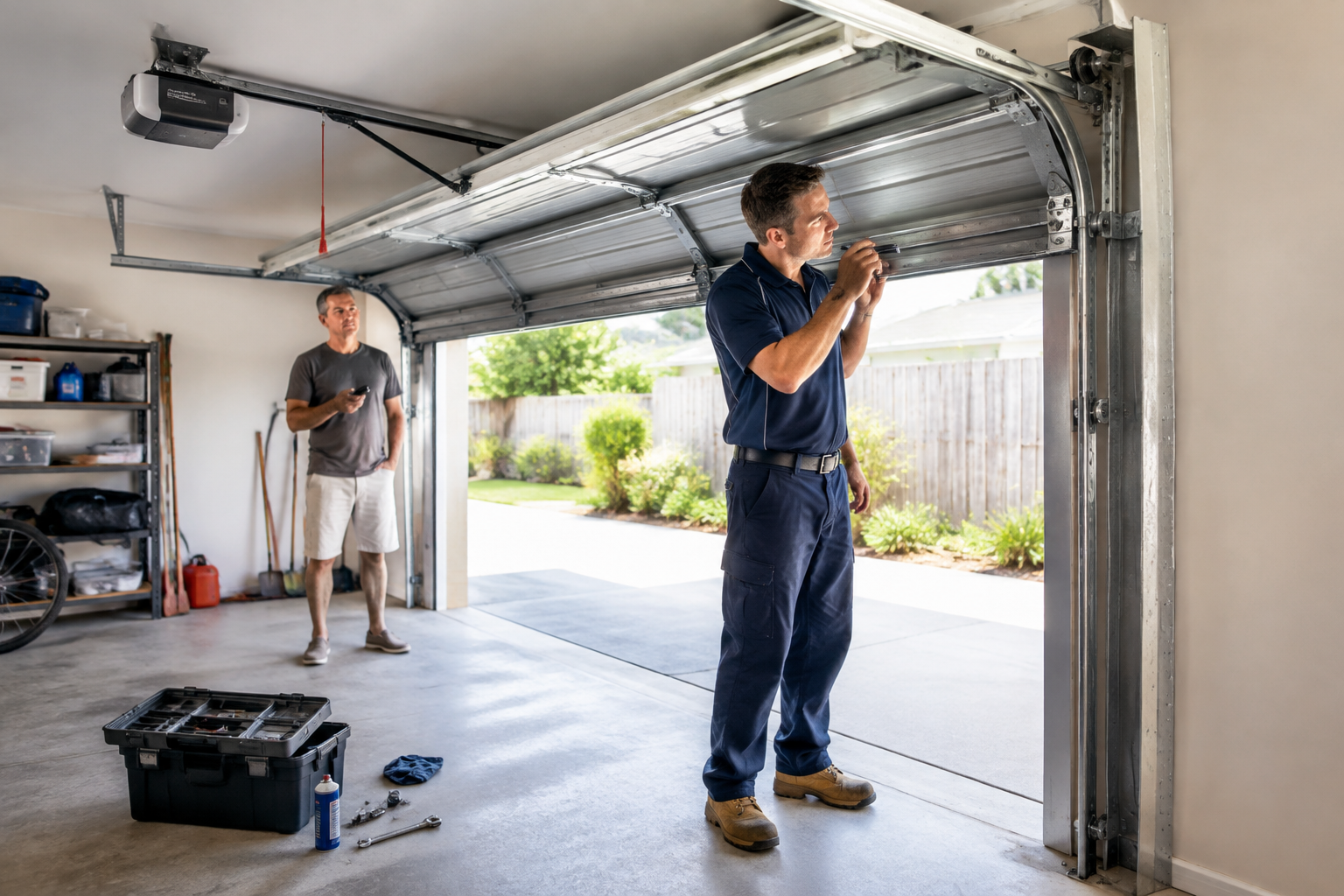
For anything beyond a quick check, it’s worth having expert technicians handle re-coding remotes or automatic garage doors properly. We strongly recommend contacting a reliable local team rather than guessing at a fix yourself.
Wrapping Up: Safety That Starts Long Before the Remote
Garage door safety really comes down to a few things working together. Sensors, cables, opener settings, and regular servicing all play their part, and none of them works well in isolation.
If there’s one thing worth taking from this, it’s not to wait for a warning sign. A quick check now costs far less than a repair later. It also keeps your family and property safer along the way.
Contact us at Control Room today for a garage door service that gives you peace of mind. Our team’s ready to help, no matter your door’s style or age.

Why Garage Door Balance Affects Your Opener, Cables and Everyday Reliability
Why Does My Garage Door Stop Halfway? 7 Places to Look for the Problem
Why Garage Door Photo-Eye Sensors Fail Even When Nothing Is Blocking Them
Why a Garage Door Can Look Level When Closed but Travel Crooked on the Tracks
Garage Door Noises Decoded: What Grinding, Squeaking and Rattling Can Mean


Follow our social


