Why Garage Door Photo-Eye Sensors Fail Even When Nothing Is Blocking Them
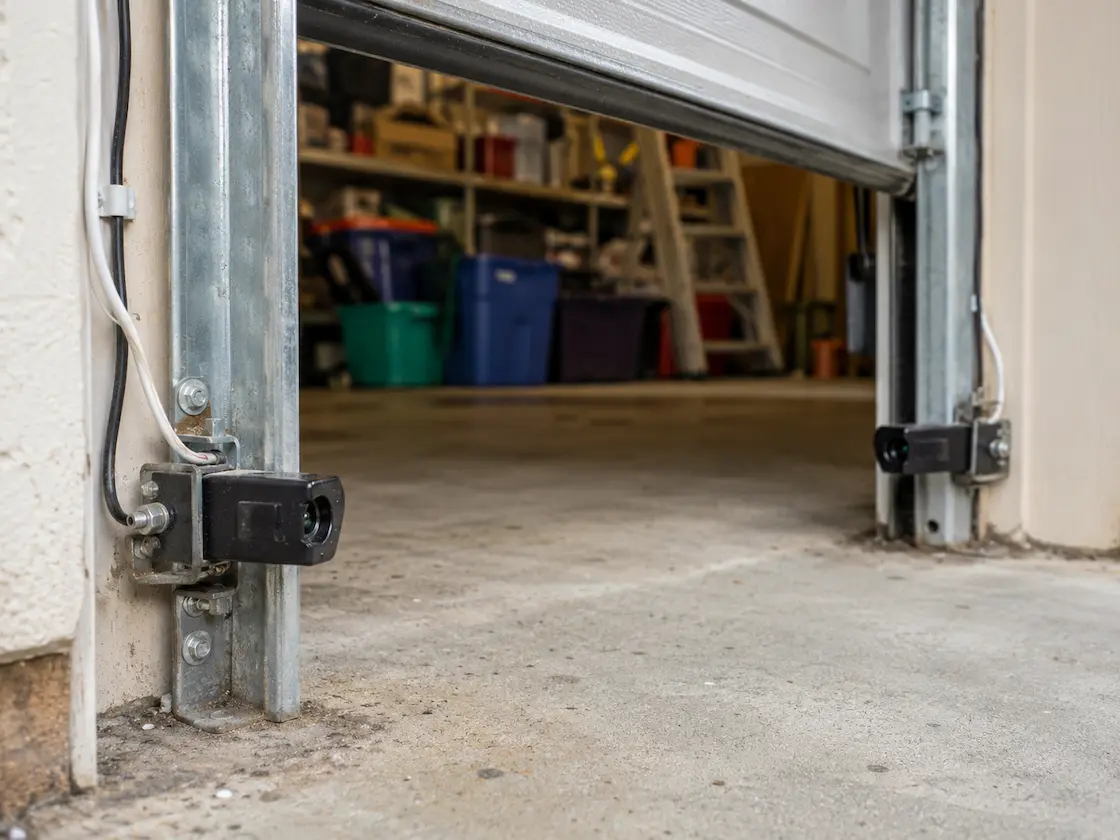
Why Garage Door Photo-Eye Sensors Fail Even When Nothing Is Blocking Them
There’s nothing blocking the sensors, yet your garage door still won’t close. That’s one of the most common garage door sensor problems homeowners run into. And the fix rarely has anything to do with what’s standing in the doorway.
Sunlight, dirt, loose wiring, or a bumped bracket can all trick the system into reacting as if something’s there. And photo-eye sensors read light and signal strength, so anything that triggers either one can set them off. Each of these causes has its own warning signs and its own fix.
At Control Room, we’ve spent over a decade fitting and repairing panel lift doors across Wynnum, Ipswich, and Chermside. We’ve seen every version of this problem firsthand. Every check below comes straight from what we’ve learned fixing these on-site.
Garage Door Sensor Problems Aren’t Always About Something Blocking Them
Garage door sensor problems don’t always start with something in the doorway. Most homeowners check the doorway for anything solid blocking the path, but the real cause is often something the sensors are reacting to instead. Here’s where these issues usually come from:
- Alignment Shifts: Even a slight bump can knock one sensor out of position, breaking the connection between them. Once that happens, the door won’t close no matter how many times you try.
- Dirt on the Lenses: Dust, cobwebs, or grease can block enough light to make the sensor think something’s there. This buildup happens slowly, so it’s easy to miss until the door stops responding.
- Damaged Wiring: A worn or disconnected wire can cause the sensor to send false signals to the garage door opener. Even a minor fray in the insulation is enough to cause problems.
Knowing these often saves you from repeatedly pressing the remote control, hoping the door finally responds.
Can Misaligned Door Sensors Stop an Automatic Garage Door From Closing?
Yes, even a tiny shift in position can stop an automatic garage door system from closing properly. The two sensors need to point directly at each other to send a clear signal across the doorway.
Believe it or not, a simple bump from a wheelie bin or a broom handle can knock a door sensor out of line. We’ve even seen a stray soccer ball do it during a backyard match. Once that happens, the beam breaks, and the opener reads it as an obstruction even though the path is completely clear.
What’s more, every setup has a sending sensor and a receiving sensor, and both need to line up exactly. Poor alignment between the two causes most false readings, even when nothing is physically in the way.
Most openers rely on safety sensor alignment and LED indicators to confirm both sensors are properly aligned. A steady light means the sensors are lined up correctly, while a blinking or dim light points to a problem. And checking that light first can save you a wasted call-out.
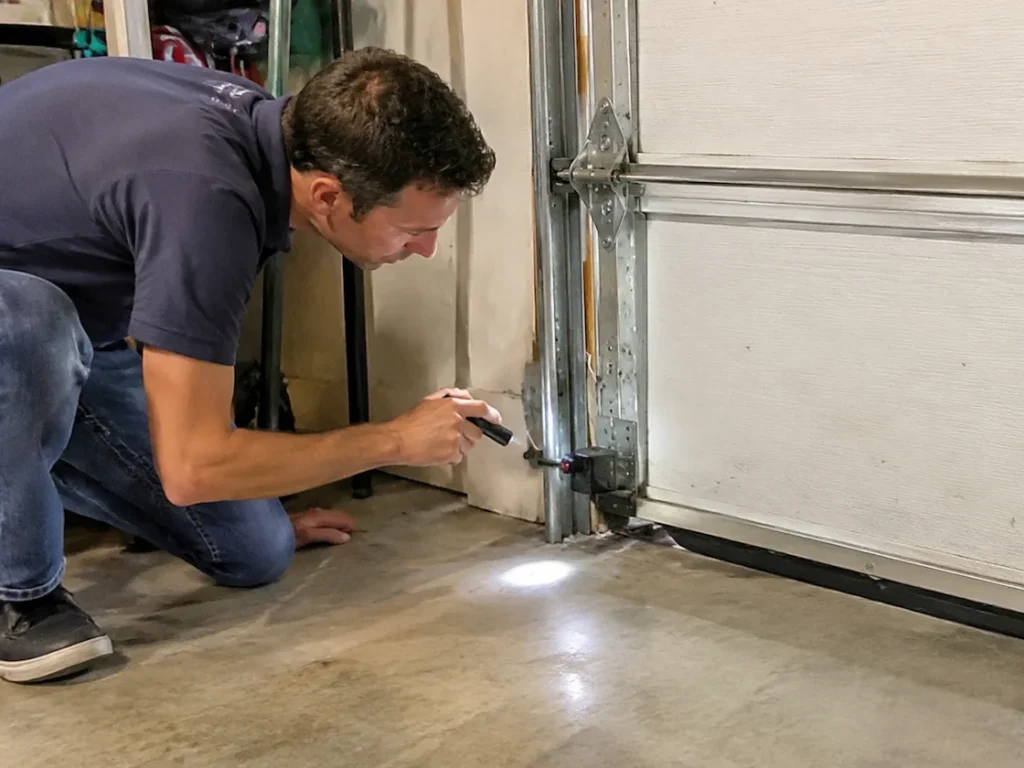
Dirty Lenses Cause More Garage Door Sensor Issues Than You’d Think
Dirty lenses are a leading cause of garage door sensor issues, and they’re also one of the easiest to fix. Yet most homeowners never think to check the sensor casing until the door stops responding altogether. Let’s see how grime affects the sensors and how you can check them yourself.
What Grime Does to the Signal
A layer of dust, pollen, or a stray cobweb can weaken the sensor’s signal enough to fool it. The opener then reads that weak signal as an obstruction, even with a clear doorway. Sensor lenses sit low to the ground, right where debris and lawn clippings naturally collect.
A Quick Way to Test It
Wipe both sensor lenses with a soft cloth and watch the indicator lights. If the light turns steady after cleaning, grime was the problem all along. Give the sensor casing a quick wipe too, since buildup can happen there just as easily.
In our experience with Brisbane homeowners, dirty lenses cause more false alarms than any other issue on this list.
How Photo-Eye Sensors Work
Photo-eye sensors send an invisible infrared beam across the bottom of the doorway. One sensor sends the beam, and the other receives it, so the opener knows the path is clear before the door closes. That same beam is what lets the system detect obstructions without anyone standing there watching.
The moment something breaks it, whether it’s a pet, a box, or a person, the door stops or reverses immediately. And most sensors use LED lights to show their current status at a glance. A green LED usually means the beam is connecting properly, while a red or flashing light points to a fault.
Once you know what each colour means, wiring problems become a lot easier to spot.
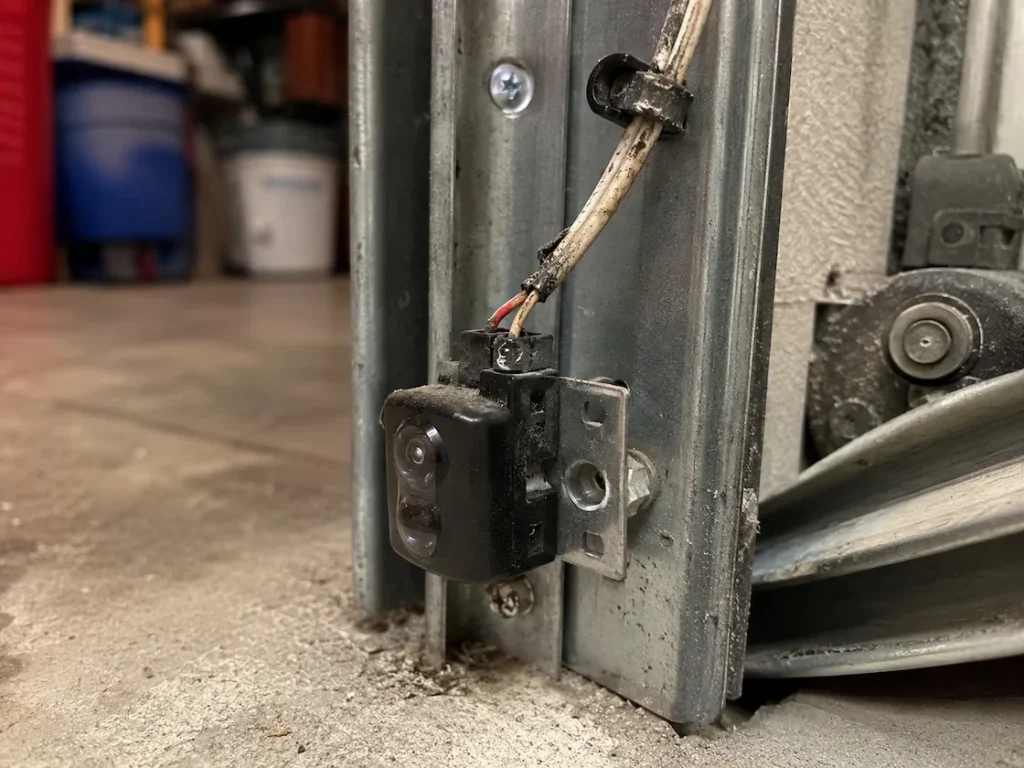
Loose Wiring Can Leave You With Faulty Sensors and No Warning
Loose or damaged wiring is another common cause behind faulty sensors, and it’s easy to miss because the sensor itself often looks fine. The problem sits in the connection, rather than the unit itself.
But here’s the tricky part: a wire that’s barely connected can still work fine for weeks, then fail without warning. In fact, wiring faults are one of the most overlooked causes of sensor failure, precisely because everything looks normal until it isn’t.
Typically, most wiring issues trace back to either an open or shorted wire somewhere between the sensor and the opener’s logic board. A shorted wire can also drain the power supply faster than normal. This sometimes shows up as a dimmer or flickering light on the unit.
Many openers use white wires connecting to a white terminal on the back of the unit. The exact colour and layout can vary by brand. A quick tip: check the wiring connections at both ends, since loose terminals or frayed insulation are the usual culprits.
Why Sunlight Makes Garage Door Sensors Not Working a Seasonal Problem
Direct sunlight causes garage door sensors not to work by overwhelming the receiving lens with too much light. Sunlight can interfere with garage door safety sensors, particularly when the sun sits low and beams straight into the lens.
Here’s how that plays out across the day:
- Morning Sun: Early sunlight can flood the receiving sensor and drown out the signal from the other side. This is most noticeable in autumn and winter, when the sun sits lower for longer.
- Afternoon Glare: As the sun moves lower again, the same problem can return from the opposite angle. Homes facing west often notice this more, since the glare lines up directly with the driveway.
Placing a sun shield over the sensor usually solves the problem. Most homeowners notice the difference within a day or two, once the shield blocks the worst of the glare.
Vibration and Mounting Movement Slowly Wear Down Garage Door Safety
Open and close a door thousands of times, and something’s bound to work loose eventually. The brackets holding your sensors in place take on that vibration every single time the door runs.
Brackets never announce they’re loosening. They just let go, usually just enough to throw the alignment off without anyone noticing. That small shift is enough to break the connection between both sensors and cause a false reading.
A sensor that’s slightly out of position defeats the purpose it was built for, since garage door operator safety requirements exist specifically to prevent accidents. Catching that shift early keeps the reversal system doing its job, which means less risk of the door closing on something it shouldn’t.
Safe Checks to Try Before Booking Garage Door Repairs
These checks take less than five minutes, and in our experience, they solve the problem outright more often than not. Here’s a simple troubleshooting checklist to run through before calling anyone out.
- Clean the Lenses: Dust and cobwebs are the easiest cause to rule out first. Do this even if the lenses look clean, since fine dust often isn’t visible from a distance.
- Fix the Alignment: Loosen the wing nut and adjust each sensor so it points directly at the other. On most models, a small bracket lets you shift the angle without removing the whole unit.
- Check Wiring: Look at both sensors and the garage door opener for frayed, loose, or chewed wires. A connection that looks fine can still be loose enough to cause problems.
- Block Sunlight: Add a small shield or angle a piece of cardboard over the lens during peak glare hours. This is worth trying if the fault only shows up at certain times of day.
- Watch the Lights: A glowing steady light usually means the system is working correctly again. If the light stays dim or keeps flashing, one of the earlier checks likely needs another look.
If the door still won’t close after trying all five checks, the fault probably needs professional attention. Experienced technicians can usually confirm this in a single visit.

When to Call a Professional Technician
If none of the checks above fixes the problem, it’s time to call a professional garage door technician rather than keep guessing. Some faults sit deeper in the system than a homeowner can safely reach.
Fortunately, skilled technicians carry the tools to test each sensor individually, rather than relying on trial and error at home. They can pinpoint within minutes whether it’s a simple adjustment or something bigger, like a failing logic board.
In some cases, the units themselves are too worn to save, and the only fix is to replace garage door sensors. Malfunctioning garage door sensors that keep failing after every check usually point to age rather than a one-off fault. That’s when proper garage door repairs make more sense than another DIY attempt.
Get Your Garage Door Sensors Back on Track
Plenty of sensor issues turn out to be simple fixes, but it’s worth knowing when to stop guessing. If you’ve tried cleaning the lenses, checking alignment, and inspecting the wiring, and the door still won’t close, that points to faulty sensors. A proper diagnosis is the next step.
We’ve spent over a decade solving garage door sensor problems across Wynnum, Ipswich, North Lakes, and Chermside. We know when a DIY check has reached its limit. Our guide on garage door safety features covers the full sensor system if you want to understand how these parts work together.
From a quick sensor adjustment to a full replacement, our garage door services cover every step of the process. Give our team a call, and we’ll help you close the garage door safely again, without the guesswork.

Why Garage Door Balance Affects Your Opener, Cables and Everyday Reliability
Why Does My Garage Door Stop Halfway? 7 Places to Look for the Problem
Why a Garage Door Can Look Level When Closed but Travel Crooked on the Tracks
Garage Door Noises Decoded: What Grinding, Squeaking and Rattling Can Mean
Why Garage Door Safety Starts Before You Press the Remote


Follow our social


